

Proportional Pressure Regulator
What is an Electronic Pressure Regulator?
In modern automated industrial and manufacturing settings, precise pressure control is essential for efficiency, safety, and performance. An electronic pressure regulator (EPR) uses sensors to measure real-time pressure, a microprocessor to process input signals and determine the required output, and a proportional valve to modulate flow and maintain the desired pressure. Unlike traditional mechanical regulators that rely on springs and diaphragms, the EPR enables accurate digital control, faster response, remote adjustability, integration with control systems, and reduced maintenance.
Proportional Electronic Pressure Regulator Working Principle
Our electronically controlled pressure regulator is a complete closed-loop servo system consisting of two solenoid valves, an internal pressure transducer, and electronic controls. Based on analog signals, the pressure is controlled by two solenoid valves to maintain precise pressure; one valve functions as inlet control, the other as exhaust. The pressure output is measured by an internal or an external feedback pressure transducer that provides a feedback signal to the electronic controls. Our product of electro pneumatic regulator features high speed, high pressure, and high resolution.
Selections of Electronic Regulators:
High Speed Proportional Regulator
QKL-HS series are 3-way electronic pressure regulators. It consists of proportional solenoid, pressure transducer, intelligent electronics, and a refined spool. It features high flow rate, extremely fast pressure switching time, high accuracy, and compatible with oxygen and hydrogen gas. Using the powerful in-house software, the control parameter can be customized that allows user to build unique pressure profile. It is available with analogue and digital command signal. HS series electronically controlled pressure regulator can be used in demanding environment and is compatible with oxygen, hydrogen, and helium gas.
Model Selection Guide — Which Proportional Pressure Regulator Should You Choose?
Use the table below to narrow the range first, then confirm the model on its product page. Pressure rating, flow capability and communication options are the three decisions that matter most.
| Model | Pressure / Vacuum Range | Max Flow | Command Signal | Notable Feature |
|---|---|---|---|---|
| QKL-B1S | 0–30 bar (435 psi), max inlet 34 bar (493 psi) | Low flow | 0–10 V / 4–20 mA / RS485 | No pressure droop in static or dynamic flow; resolution to 5 mV |
| QKL-B3H | 0–30 bar series | 6000 L/min (212 scfm) | 0–10 V / 4–20 mA / RS485 | High-flow version for rapid pressure changes in larger volumes |
| QKL-HS0 / HS1 / HS2 | 3-way, see datasheet | High | Analog and digital | Extremely fast pressure switching; O₂, H₂ and He compatible |
| QKL-B4H | 0–70 bar (1015 psi) | 170 L/min | 0–10 V / 4–20 mA; feedback 0–10 V / 4–20 mA | Often used to replace GX series pressure controllers |
| QKL-B3V | 0 to −14 psi (0 to −101 kPa) vacuum | 250–600 L/min | Analog or switch output | Self-relief; IP65; 24 VDC; M12 connector; G1/4" port |
| QKL-B1TR / QKL-B4HR | Ultra-high resolution series | — | Analog or digital | Fine pressure tuning for semiconductor and metrology processes |
| QKL-B1T + Type 600 booster | 0–10 bar | 4200 L/min | Analog or digital | Resolution to 0.01 psig with amplified flow |
| QKL-B4H-P100 | 0–100 bar (1450 psi) | 140 L/min | 0–10 V / 4–20 mA; feedback 0–10 V / 4–20 mA | High-pressure, low-flow range for test and forming equipment |
| QKL-B1T + QKL-BPF ratio regulator | Set 0–5 bar, output up to 100 bar, extendable to 210 bar | Depends on volume booster | Analog or digital | Up to 40× amplification, turndown 1:420; also handles water and steam |
| KLSV-2/1-6, KLSV-3/1-6 | Dual and triple solenoid valve | — | — | Directional control accessory for multi-line pressure circuits |
— = not published on this page. Accuracy, linearity and repeatability are specified differently across series; confirm against the individual product datasheet before designing.
FAQ section – Proportional Electronic/Digital Pressure Regulators
- What are the differences between Proportional Pressure Regulator, Electronic Pressure Regulator, Electro Pneumatic Pressure Regulator Electronic, I/P Converter, Digital Pressure Regulator, and air flow regulator with digital pressure gauge?
They are the same class of device sold under different names. The table below explains where each name comes from.
Name Why it is used Proportional Pressure Regulator KaoLu's primary product name: outlet pressure follows the command signal proportionally under closed-loop control. Electronic Pressure Regulator (EPR) Emphasises that regulation is performed by electronics instead of a spring and diaphragm. Electro-Pneumatic Pressure Regulator Used when the regulated medium is compressed air driven by an electrical command. I/P Converter (E/P Converter) Process-industry term: an electrical current (I, typically 4–20 mA) is converted to a pneumatic pressure (P). Digital Pressure Regulator Used when the command is a digital bus signal such as RS485 Modbus rather than an analog voltage or current. Electronic / Electric Air Regulator Shop-floor name for a regulator controlling compressed air. Air Flow Regulator with Digital Pressure Gauge Describes units that both regulate pressure and display the outlet pressure digitally. - Where is the digital pressure regulators used? Digital pressure regulator is usually used for laser cutting, plastic blow molding machines, tension control equipment, tire making machines, etc.
- Is the pressure regulator resistant to dirt?
No, it is not resistant to dirt particles. Please use dry clean air and filter with < 5 μm. - Any restriction on mounting orientation?
There is no restriction on mounting orientation; however, protect the regulator from water droplets, oil, and welding slag.
Knowledge Base
How Does a Proportional Pressure Regulator Work?
A Proportional Pressure Regulator has many advantages over mechanical manual regulators. A manual regulator will maintain pressure downstream, most effectively with constant upstream flow rates. However, upstream flow and pressure will often fluctuate in most applications. Pumps and compressors deliver pulses, and the pressure will fluctuate with demand. When a mechanical pressure regulator lacks accuracy or can’t respond fast enough, the result is uneven pressure output. This simple device might be good enough when accuracy isn’t as crucial. However, a digital pressure regulator delivers better accuracy and stable output pressure by utilizing a control signal and the feedback signal to create closed-loop pressure control.
Uses of Regulators
Electronic pressure regulators (electric air regulators) maintain a constant output pressure within a pressurized system even if there are fluctuations in the incoming pressure to the regulator. Mechanical pressure regulators are typically only adjustable by hand, limiting their usability in a digitalized process environment. When using an electronic gas pressure regulator with a digital control system, the precise output pressure is controllable via slight adjustments to the control signal. An internal pressure transducer creates a closed loop control device and offers a feedback voltage of the current output pressure. By reading this feedback signal from an electronic regulator, control systems can make real-time adjustments, greatly improving consistent pressure regulation in the most demanding applications.
The Working Process:
Electronic pressure regulators (automatic air pressure regulator) are a big improvement over manual regulators; they are simple and very effective at allowing better control. An electronic air regulator uses a fill valve and a vent valve to maintain the outlet pressure at the desired set-point. A small inner pressure sensor monitors the output pressure and the digital controller adjusts the flow output of the internal valves to retain the required set-point (i.e. closed-loop control). That means that when you set the desired pressure, the regulator(pressure regulator digital) will maintain this pressure even with changing flow rates through the system. The internal pressure transducer gives immediate feedback to adjust the flow of either the fill or vent valve so the output pressure remains static.
When the control signal increases, the internal proportional pressure control valve activates, increasing pressure into an internal pilot chamber. When this happens, more of the inlet pressure passes through the proportional fill valve and into the pilot chamber. The pressure in the pilot chamber grows and causes the upper surface of the diaphragm to operate. Because of this, the air supply valve linked to the diaphragm opens, and a portion of the supply pressure becomes output pressure. This output pressure goes back to the control circuit using the pressure sensor. The fill valve will continue to slightly adjust until the output pressure is equivalent to the desired set-point of the control signal.
Please check our video on: Kao Lu YouTube channel
How Proportional Pressure Regulators Improve Laser Cutting Accuracy?
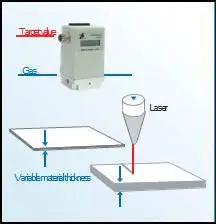
In laser cutting, maintaining consistent assist-gas pressure is crucial for clean, burr-free cuts and stable kerf width. Traditional mechanical regulators struggle with rapid changes in cutting conditions. In contrast, proportional pressure regulators respond in real time to input signals from CNC controllers, integrate closed-loop feedback sensors, and adjust gas pressure dynamically—delivering tighter control (±0.1% accuracy), optimized gas consumption, better repeatability, faster process setup, and improved edge quality.
Top 5 Applications for Proportional Air Pressure Control
Proportional air pressure control plays a vital role across several industries by allowing smooth, precise adjustment of air pressure rather than simple on/off regulation. The top five applications highlighted are:
- Industrial Automation & Robotics — Enables smooth gripping, adaptive pressure for varying loads, and reduces wear-on pneumatic systems.
- Medical & Laboratory Equipment — Ensures consistent pressure in devices like ventilators and surgical tools, supports clean air control and compliance with medical standards.
- Automotive Manufacturing & Testing — Used for exact tire inflation, leak-testing, and consistent paint spraying, improving efficiency and reducing waste.
- Packaging & Material Handling — Controls sealing pressure, adjusts gripping force for delicate items, and maintains stable pressure in filling machines across food/beverage, pharma, and logistics applications.
- Semiconductor & Electronics Manufacturing — Provides ultra-clean, stable air pressure for wafer handling, laser etching, and PCB assembly, thereby minimizing defects and boosting yields.
Product Description
The low-flow electronic pressure regulator is designed for applications that require precise, on-demand pressure changes together with continuous monitoring of the actual output pressure. A digital pressure readout shows the present outlet pressure value, so operators can verify the set point without adding a separate gauge, and the monitor output can be fed back to the machine controller or data logger.
Available with 3 selections of input signal: 0-10VDc, 4-20mA, or RS485 Modbus. Monitor signals can be chosen from 1-5V, 0-10V, or 4-20mA. Our special design offers high pressure and high flow capability electronic air pressure regulators in unibody design.
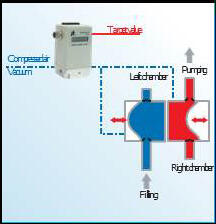
For applications that require a high pneumatic flow rate, we offer the option of an air pilot volume booster to amplify downstream flow. For applications that require an external pressure transducer, there is also an option to link our pressure regulators to external sensors for closed-loop control. All our electronic pneumatic regulator have CE, SGS, RoHS certification with ISO13485 quality system. Applications: Laser cutting, leak tester, tension control, PET bottle molding machine, multi-stage pressure control, etc.
Applications for Electronic Pressure Regulators
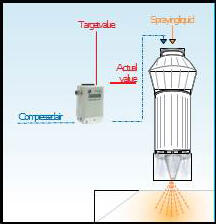
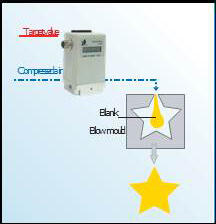
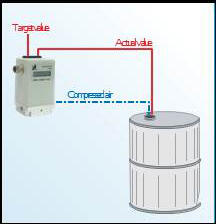
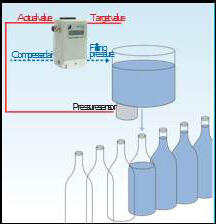
Related Applications & News

High Pressure Filter
- Aluminum construction
- Efficient buffering action
- Wide filtering area
- Metallic drain cock
Air Volume Booster(Nitrogen Balance Valve)
◆ SUS304 stainless steel body, durable.
◆ High-temp diaphragm resists heat impact.
◆ High flow, fast response.
◆ Self-relief design, no bypass needed.